Thailand vs China Tyres: An Honest Guide for Wholesale Buyers
If you’re sourcing wholesale tyres for distribution in Australia or the Middle East, you’ve almost certainly weighed up Thailand against China. Both countries export tyres by the container load. Both offer competitive pricing. So what’s the real difference — and which source gives your business a better long-term position?
This guide lays it out honestly, without a sales pitch. We’ll cover raw materials, quality consistency, compliance, pricing, and logistics — so you can make a call based on facts, not marketing copy.
- The Raw Material Advantage: Natural Rubber
Thailand is the world’s largest producer of natural rubber, accounting for roughly 30% of global supply. This is not a minor footnote — it shapes everything about Thai-made tyres.
Natural rubber outperforms synthetic rubber in three critical areas for commercial buyers:
Tensile strength and tear resistance — critical for truck, bus, and OTR tyres operating under heavy load
Heat dissipation — natural rubber runs cooler under sustained highway and desert driving conditions
Rolling resistance — lower rolling resistance translates directly to fuel savings for fleet operators
Chinese tyre manufacturers use a higher proportion of synthetic rubber, largely because China imports most of its natural rubber. That’s not a criticism — it’s a cost and supply chain reality. But for wholesale buyers whose customers operate vehicles hard, in hot climates, the compound difference matters.

- Quality Consistency: What the Data Actually Shows
Chinese tyre manufacturing ranges from excellent (Giti, Triangle, Sailun) to highly variable (hundreds of smaller export brands). The challenge for wholesale buyers is that the brand name on the sidewall doesn’t always tell you which factory produced it, or which compound batch was used.
Thailand’s tyre industry is more consolidated. The majority of export volume comes from factories operating under Bridgestone, Michelin, Continental, Yokohama, and a smaller number of established Thai brands. Quality auditing is tighter because the brand equity at stake is higher.
For a wholesale buyer, this matters most at the end of the chain — your retail customers and fleet operators. A batch of tyres that performs inconsistently damages your reputation as a distributor, not just the factory that made them. Sourcing from a more consolidated manufacturing base reduces that risk. - Compliance: ADR (Australia) and ESMA (UAE)
This is where country of origin becomes a practical issue, not just a quality debate.
Australia — ADR Compliance
Tyres sold in Australia must comply with Australian Design Rules (ADR). Thai-made tyres from established factories — particularly those producing under major international brands — are routinely ADR-certified and carry the required markings. When sourcing from Thai suppliers, ask specifically for ADR certification documentation before committing to a container.
Chinese tyres can also be ADR-compliant, but the compliance picture is less consistent across the range. Budget-tier Chinese brands, in particular, may not carry current ADR certification for all SKUs. The cost saving on paper can be offset by compliance costs on arrival.
UAE & GCC — ESMA Certification
The UAE’s Emirates Authority for Standardization and Metrology (ESMA) requires tyre certification before products can be sold in the UAE market. GCC Standardization Organisation (GSO) standards apply across the wider Gulf region. Again, established Thai manufacturers supplying major brands are generally well-positioned on this front.
The practical advice is the same for both markets: always verify certification status with your supplier before ordering, and ensure documentation is included with each shipment. - Pricing: Is China Actually Cheaper?
At the per-unit level, some Chinese tyres are priced lower than comparable Thai-made options. But “cheaper” is a landing-cost calculation, not a factory gate price comparison.
When you account for:
Compliance re-testing costs if certification is missing or incomplete
Higher warranty claim rates on lower-consistency product
Reputational cost of customer complaints
Freight costs from Chinese ports vs Laem Chabang to AU and ME routes
The total cost of ownership often narrows significantly. Thailand’s Laem Chabang Port is one of Asia’s busiest container ports, with direct FCL routes to Jebel Ali (10–14 days) and all major Australian ports (12–16 days). Freight rates are competitive and scheduling is reliable. - Brand Range: Who Can You Actually Stock?
This is arguably Thailand’s strongest practical advantage for a wholesale buyer: the concentration of major international brand manufacturing in one country.
Thailand is home to manufacturing facilities for Bridgestone, Michelin, Continental, Yokohama, and several other globally recognised brands. This means a wholesale buyer sourcing from Thailand can offer their retail and fleet customers premium brand names — not just value-tier alternatives.
China manufactures at scale under Chinese brand names, with some licensed international production. But if your customers are asking for Bridgestone or Continental by name — and in both the Australian and GCC markets, they often are — Thailand gives you access to the real thing at wholesale prices. - For Australian Distributors: 4WD, Agricultural & TBR
Australia’s wholesale tyre demand is heavily weighted toward segments where Thai manufacturing excels:
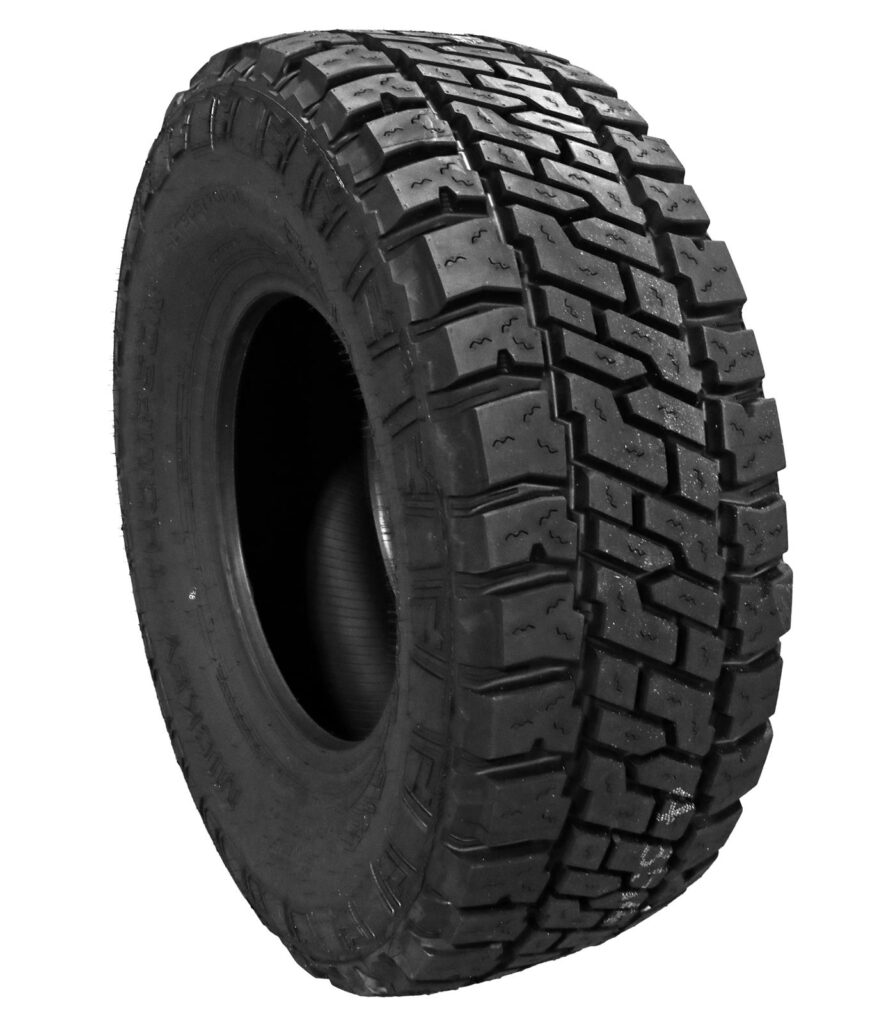
4WD and ute tyres — the largest retail segment in AU; Thai-made all-terrain and mud-terrain options are well-suited to outback, farm, and mining use
Agricultural tyres — Thailand’s natural rubber compound holds up in the field; competitive pricing for farm equipment operators
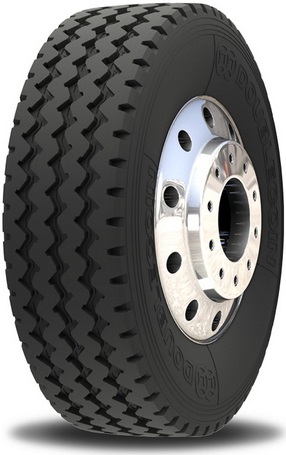
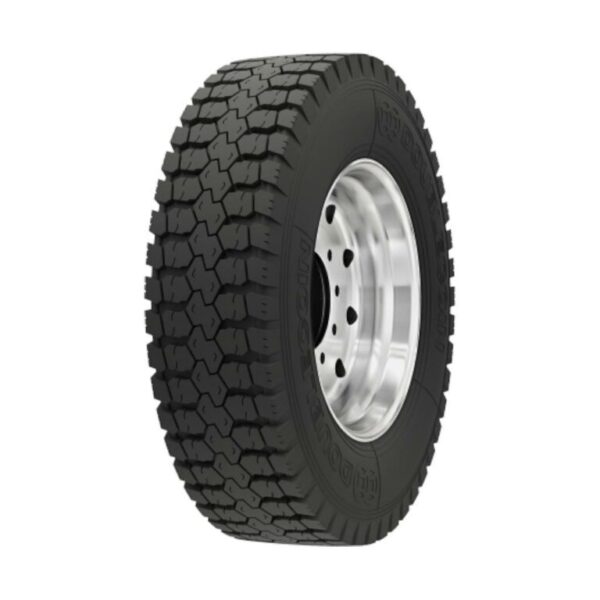
TBR (truck and bus radial) — high-demand across AU transport; common sizes (295/80R22.5, 315/70R22.5) are readily available from Thai stock
Australia imported $321 million in new pneumatic tyres from Thailand in 2025, making Thailand the country’s second-largest tyre supplier by volume. The trade route is well-established and the ADR compliance infrastructure is in place. - For Middle East Distributors: SUV, Fleet & Construction
The GCC tyre market is projected at $5.1 billion in 2026, driven by a large SUV and 4WD fleet, a growing logistics sector, and ongoing construction demand from Saudi Vision 2030 and UAE infrastructure projects.
Thai-made tyres address the region’s specific demands in two ways:
Heat performance — natural rubber’s superior heat dissipation is a genuine operational benefit at 45°C+ in UAE summer conditions; fleet operators who have switched from synthetic-heavy products notice the difference in tyre life
OTR and construction tyres — loader, crane, and dump truck tyres from Thai manufacturers are a strong fit for Saudi and UAE construction sites
UAE-based distributors can import via Jebel Ali using JAFZA free zone facilities for duty-free re-export across the GCC — making a single Thailand-to-Dubai shipment the starting point for Saudi Arabia, Oman, Kuwait, Qatar, and Bahrain distribution.
The Bottom Line: Which Should You Choose?
China remains a valid sourcing option for buyers prioritising unit cost on value-tier PCR and for buyers who have done the compliance work on specific Chinese brands. It’s not a bad answer — it’s just a different answer.
Thailand is the stronger choice when:
Your customers want recognised brands (Bridgestone, Michelin, Continental, Yokohama)
You’re supplying commercial fleets that track tyre life and fuel costs
You’re operating in markets with clear compliance requirements (ADR for Australia, ESMA for UAE)
You’re supplying hot-climate or high-load applications (GCC fleets, AU mining, agricultural)
You want to consolidate sourcing with one supplier across a range of 12,000+ SKUs
Sourcing for Australia? Visit our wholesale tyres Australia page for ADR-certified stock, AU port delivery details, and a quote request form.
Sourcing for the UAE or GCC? Visit our wholesale tyres UAE page for ESMA-compliant stock, Jebel Ali shipping details, and GCC distribution options.
PrimeTiresHub supplies wholesale tyres directly from Thailand to Australia and the Middle East. 200+ brands, 12,000+ SKUs, FCL and LCL shipments from Laem Chabang. - Shop with us