

Table of Contents
Why source tyres from Thailand? The case for Australian dealers who are done guessing

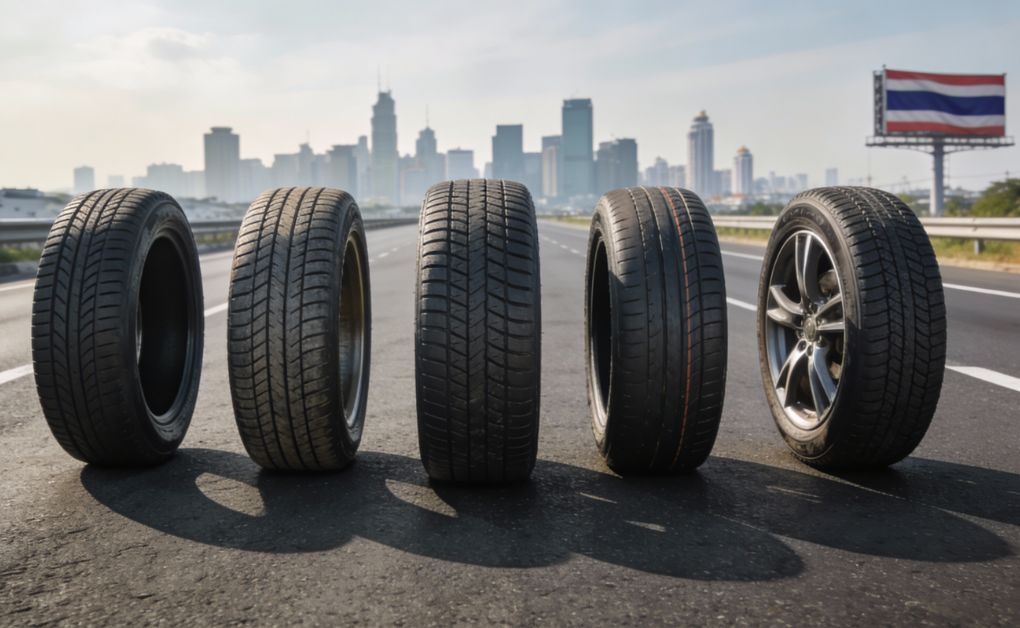
Every importer eventually asks the same question: where should I actually be buying from? There are options — China, India, South Korea, Europe. Thailand doesn’t always come up first in the conversation, which is surprising given how strong the case for it is. If you’re an Australian dealer or importer who hasn’t seriously looked at Thai supply, this is worth reading. And if you’re already sourcing from Thailand and someone’s asking you to justify it, this lays it out plainly.
Thailand isn’t just a manufacturing country — it’s the rubber country
This is where it starts, and it matters more than people realise. Thailand produces more natural rubber than any other country in the world — roughly 35% of global supply comes from Thai plantations. The factories making tyres there aren’t importing their primary raw material from somewhere else and hoping for consistency. The rubber comes from up the road.
Natural rubber outperforms synthetic alternatives in several ways that matter for tyre performance: wet grip, heat dissipation, cut resistance, and tread wear consistency across batches. These aren’t abstract engineering benefits — they show up in the performance data and in the feedback dealers get from customers who run the product over time.
When you source tyres from a country that sits on top of its primary raw material, you get a quality floor that’s harder to achieve elsewhere. That’s not marketing language. It’s a supply chain fact.
Bridgestone chose Thailand for major manufacturing capacity. So did Michelin. So did Goodyear and Yokohama. When four of the world’s largest tyre companies make the same call independently, it’s worth understanding why.
The OEM connection that changes the compliance picture
Because Thailand hosts manufacturing for the world’s major tyre brands, the factories there — including those supplying the export market — have been built to international OEM standards. ECE R30 and R54 certification, ISO quality systems, third-party audit schedules. These aren’t things Thai manufacturers do reluctantly to access export markets. They’re baseline operating requirements that have been in place for decades.
For Australian importers, this matters directly. ADR compliance requires documentation — Letters of Compliance, third-party test reports, ECE type approval certificates. When you source from an established Thai manufacturer, these documents already exist. You’re collecting paperwork, not waiting for a factory to generate something from scratch.
That’s a meaningful operational difference. Importers who’ve dealt with suppliers where the compliance documentation is an afterthought know how much time and risk it introduces. With Thai product from quality-controlled factories, the compliance stack is built in.
Six reasons Australian dealers keep coming back to Thailand
1
0% import duty under AUSFTA
The Australia-Thailand Free Trade Agreement means Thai-origin tyres enter Australia duty-free. Chinese tyres attract a standard 5% rate. On an $80,000 container that’s $4,000 — before you’ve looked at quality, compliance, or freight. Over a year of regular importing, this saving is substantial. You have to claim it with a Form D certificate of origin, but any established Thai exporter has this process sorted.
2
Natural rubber quality at the source
Covered above, but the practical implication is worth spelling out: Thai-made tyres from quality factories tend to perform more consistently across batches. The compound is what it says it is. For dealers who’ve had warranty headaches with inconsistent product from other origins, this consistency has real commercial value — fewer returns, fewer customer complaints, fewer conversations you don’t want to have.
3
ADR compliance documentation that actually exists
Established Thai manufacturers with international export programs have ECE certificates, test reports, and compliance letters on file by product line. When you ask for them, they arrive. This isn’t a minor convenience — it’s the difference between a clean import and a shipment sitting in limbo while you chase paperwork. Read our full ADR compliance guide for what documentation you need and why.
4
Brand perception that supports retail margin
“Made in Thailand” lands differently at the counter than “Made in China.” Australian tyre buyers associate Thailand with Bridgestone, Goodyear, and Michelin — brands they already trust. That association transfers to the broader category of Thai-manufactured product. It affects your ability to hold margin, your sell-through rate, and the conversations your sales staff have to navigate. It’s a commercial advantage that’s easy to underestimate until you’re trying to explain a country of origin to a sceptical retail customer.
5
Supply chain reliability from Laem Chabang
Thailand’s main export port at Laem Chabang has a strong operational track record. It handles high container volumes efficiently and has been significantly less affected by the port congestion events that have disrupted Chinese supply chains periodically since 2020. For importers managing stock levels across multiple dealers or maintaining just-in-time supply for fleet operators, that predictability has direct cash flow implications — less buffer stock, more reliable replenishment cycles.
6
A full product range across every Australian segment
Thai manufacturing covers every tyre category that Australian dealers need — PCR passenger car, TBR truck and bus, OTR mining and earthmoving, 4WD and light truck, and agricultural. You’re not limited to one segment or forced to split your sourcing across multiple countries. That’s a procurement simplification that compounds over time — one supplier relationship, one freight lane, one compliance process.
What Thailand sourcing looks like in practice
The mechanics are more straightforward than most first-time importers expect. Product ships from Laem Chabang — Thailand’s main container port — to Australian ports including Sydney, Melbourne, Brisbane, Fremantle, and Adelaide. Transit time is typically 10–18 days depending on the route and shipping line.
Minimum order quantities from established Thai suppliers are flexible — you don’t need to commit to a full 40ft container to access wholesale pricing, though FCL economics make containers the standard for dealers ordering volume across multiple sizes. LCL (less than container load) freight is available for smaller initial orders while you prove the model.
Landed cost — once you account for the 0% AUSFTA duty, freight, insurance, and broker fees — typically sits within a few percent of Chinese product landed cost, often below it. The quality and compliance advantages come at no meaningful price premium when you calculate properly. Most importers who’ve done the comparison on a like-for-like basis are surprised by how close the numbers are.
For a full cost breakdown including how to calculate your actual landed cost per unit, see our wholesale tyres Australia sourcing guide.
Who is Thailand sourcing right for?
It works particularly well for dealers and importers who are selling on quality rather than competing purely on price, who have customers that ask where the product is made, who need reliable ADR compliance documentation without spending time chasing it, and who want a supply chain that performs consistently across replenishment cycles rather than one that requires constant management.
It’s less well-suited for operations that are purely price-competing in the budget segment and where the end customer has no interest in product origin. There are cheaper options for that market — though the landed cost comparison is closer than it looks.
For most Australian dealers operating in the mid-to-premium segment across PCR, TBR, 4WD, or OTR — Thailand is the right answer. The duty saving, the compliance infrastructure, the rubber quality, and the brand perception advantage add up to a sourcing proposition that’s genuinely hard to beat from a competing origin.
We’ve been shipping from Thailand to Australia for over a decade. The dealers who come to us after a difficult experience with another origin almost always say the same thing — they wish they’d started here. The ones who start with Thai product and stay with it aren’t being loyal for loyalty’s sake. They’re staying because the supply chain works, the product performs, and the compliance paperwork doesn’t keep them up at night.
Further reading
Thailand vs China tyres: an honest comparison for Australian importers
ADR tyre certification in Australia: what importers actually need to know
How to import tyres from Thailand to Australia
Wholesale tyres Australia — full sourcing guide
Browse our product catalogue
Ready to source tyres from Thailand?
Send us your size requirements and we’ll come back with pricing, availability, and lead times within one business day.Request a wholesale quote ↗
tags: why source tyres from Thailand, source tyres from Thailand Australia, Thai tyre suppliers Australia, tyres from Thailand Australia, Thailand tyre manufacturers, why import tyres from Thailand, Thai tyres wholesale Australia, Thailand tyre exports Australia, sourcing tyres from Thailand, best tyre sourcing country Australia, Thai tyre quality Australia, Thailand natural rubber tyres, AUSFTA tyre import, Thailand vs China tyres Australia, tyre supplier Thailand Australia, wholesale tyres Thailand, import tyres Thailand Australia, Thai tyre importers Australia, Laem Chabang tyre export Australia, OEM tyre manufacturers Thailand, ADR compliant tyres Thailand, natural rubber tyre quality, Thailand tyre industry, reliable tyre supplier Australia, PCR tyres Thailand Australia, TBR tyres Thailand Australia, OTR tyres Thailand Australia, 4WD tyres Thailand Australia, tyre wholesale dealer Australia, direct tyre supplier Thailand