


Table of Contents
Thailand vs China tyres : an honest look for Australian importers
We’ve spoken to a lot of Australian tyre dealers over the years. The ones who got burned almost always got burned the same way — they went with a Chinese supplier because the FOB price looked better, the container arrived, and then something was wrong. Not always catastrophically wrong. Sometimes just wrong enough that the tyres sat in the warehouse while they worked out what to do with them. The dealers sourcing from Thailand tend not to have that story. This isn’t a knock on China as a manufacturing country. It’s just what
we’ve seen, consistently, over time.
Start with the rubber
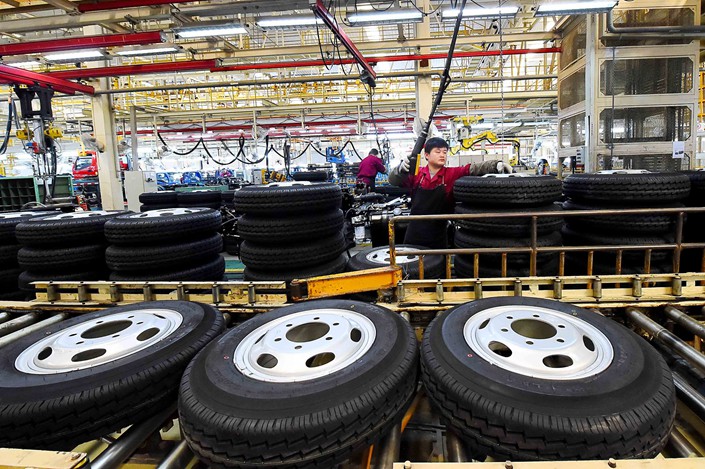
Thailand grows more natural rubber than any other country on earth. The tyre factories there — including the plants that Bridgestone, Michelin, and Yokohama run or supply from — are drawing on material that was tapped a few hours up the road. That proximity matters for consistency and for cost.
Chinese tyre manufacturers mostly use synthetic rubber or import their natural rubber — often from Thailand. By the time it reaches the factory it has changed hands, been processed differently, and costs more than it would have at source. That’s not a fatal problem. Plenty of good tyres are made with synthetic rubber. But it does introduce a variable that isn’t there with Thai production.
The practical result: when you run the same product line side by side in extended wear tests, Thai-origin tyres tend to perform more consistently across batches. The tread compounds behave the way the spec sheet says they should. That’s not always the case with Chinese product below a certain price point.
The compliance question nobody wants to talk about plainly; Thailand vs China tyres
ADR 23/01 is not optional. If a tyre doesn’t comply, it doesn’t get sold in Australia — full stop. Customs will hold it, your customer will ask questions you don’t want to answer, and you’ll be working out whether to send it back or get it retested.
Here’s what we’ve seen in practice: Thai manufacturers who are supplying into international OEM channels — which covers most of the serious factories — build compliance documentation into their standard export process. When you ask for a Letter of Compliance and test reports, they hand them to you. It’s already done.
With Chinese suppliers, it varies. Some have excellent compliance processes. Others will tell you the product is compliant and hand you a document that won’t hold up to scrutiny. The risk isn’t that Chinese tyres can’t meet ADR — they can and many do. The risk is that verifying it requires more work on your end, and if you miss something, the exposure is yours.
If you’re placing a container-load order and you’re not 100% certain the compliance paperwork is solid, you’re taking a risk that shouldn’t
shop with us exist in a well-run import operation.
The numbers on duty that most people ignore
Factor
Thailand
China
Import duty (AUSFTA)
0%
5%
Duty on $80k container
$0
$4,000
Raw material source
Natural rubber, local
Synthetic / imported
ADR compliance process
Built-in for OEM suppliers
Varies by factory
AU market perception
Strong — OEM association
Mixed, price-sensitive
FOB unit price
Slightly higher
Lower entry point
Supply chain stability
Consistent, few delays
Port congestion risk
The Australia-Thailand Free Trade Agreement means Thai-origin tyres come in at 0% import duty. Chinese tyres attract a 5% standard rate. On an $80,000 container that’s $4,000 before you’ve even looked at the contents. People focus on FOB price and forget this every time.
Factor in the compliance verification time, any retesting costs, and the financing cost of a shipment that gets held at port — and the Chinese price advantage evaporates quickly. In most of the scenarios we’ve modelled, Thai product lands cheaper when you count everything.
Thailand vs China tyres
What your customers think when they ask where it’s from
This is uncomfortable to say directly but it’s true: “Made in Thailand” and “Made in China” are not the same words to an Australian tyre buyer. One carries the association of Bridgestone and Goodyear and decades of export-quality manufacturing. The other triggers a price comparison and sometimes a flat no.
That’s not necessarily fair. There are excellent Chinese tyres and there are mediocre Thai ones. But perception shapes retail, and retail shapes what your dealers will actually move. If you’re trying to hold margin and sell on quality rather than compete on price, the origin of your product matters to the conversation happening at the counter.
When China still makes sense: Thailand vs China tyres
It’s not a blanket recommendation. There are situations where Chinese product is the right call — specific sizes that Thai factories don’t run in volume, pure price-play segments where the buyer doesn’t care about origin, or product categories where you’ve done the compliance work on a specific factory and trust the output. Some importers run both origins across different SKU ranges and it works well for them.
But if you’re building a wholesale tyre import business meant to last — one where your dealers trust your product and you’re not firefighting compliance issues — Thailand is a more solid foundation.
The 5% duty saving alone is often enough to offset the FOB difference. Add in lower compliance risk, better brand perception in the Australian market, and more consistent rubber quality, and the case for sourcing from Thailand becomes pretty straightforward. The dealers we see building durable import businesses are mostly sourcing Thai product. That’s not coincidence.
Before you commit to any supplier — origin aside: Thailand vs China tyres
A few questions worth asking regardless of where the tyres come from: Can you provide ADR compliance documentation for every product line, not just on request? What’s your lead time from order confirmation to vessel loading, and what happens if it slips? Do you have references from existing Australian importers I can actually call? What QC process happens before loading — and can I see records?
A supplier who hesitates on any of these is telling you something worth knowing before you wire a deposit.
If you’re new to importing tyres into Australia, the ADR documentation to ask for is test reports to AS/NZS standards and a Letter of Compliance referencing ADR 23/01. For truck and bus tyres, also confirm the relevant ECE R54 certification. Any established Thai exporter will have this ready without you needing to chase it.
Looking to source Thai tyres for the Australian market?
Request our wholesale price list — PCR, TBR, 4WD, and OTR ranges with full compliance documentation.Get the wholesale price list ↗
Thailand vs China tyres
Leave a Reply