


Wondering what’s the Right Tyres for Australian Conditions?
Wondering what’s the Right Tyres for Australian Conditions?
Selecting the correct tyres for your vehicle is one of the most critical maintenance decisions you will make as a driver. In Australia and across the Middle East, the demands placed on tyres are uniquely severe — from the corrugated outback tracks of Western Australia to the sand dunes of the Arabian Peninsula and the extreme heat radiating off bitumen highways in both regions. This guide breaks down the key technical parameters you must understand before purchasing your next set of tyres.
Table of Contents
1) Understanding Tyre Load Index and Speed Rating
Every tyre carries a service description printed on its sidewall — for example, 265/70R16 112T. The number 112 is the load index, indicating the maximum weight each tyre can support (in this case, 1,120 kg per tyre). The letter T denotes the speed rating, meaning the tyre is certified safe up to 190 km/h under optimal conditions.
For Australian 4WD and ute drivers, always match or exceed the OEM load index specified in your vehicle’s tyre placard (located inside the driver’s door jamb). Fitting a tyre with a lower load index than specified is illegal under Australian Road Rules and voids your vehicle’s insurance coverage in the event of an incident.
In the Middle East, where vehicles are frequently loaded with passengers and cargo in extreme heat, a minimum load index of 108 (1,000 kg per tyre) is recommended for SUVs and pickup trucks. Many drivers in Kuwait, Saudi Arabia and the UAE underestimate the combined effect of heat and load on tyre structural integrity. Right Tyres for Australian Conditions, Right Tyres for middle east Conditions
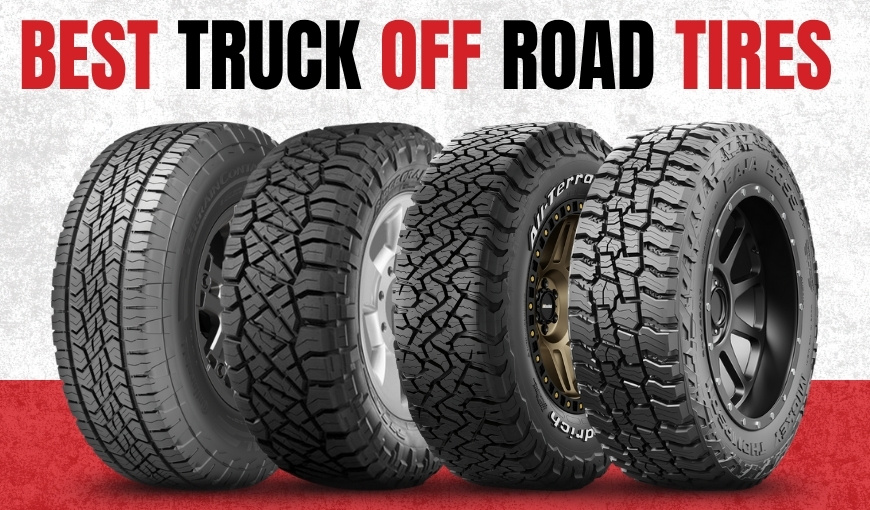
2) All-Terrain vs Highway Terrain — Which Do You Actually Need?
The two most common tyre categories for 4WD and pickup truck owners in both Australia and the Middle East are All-Terrain (AT) and Highway Terrain (HT). Understanding the difference is essential:
Highway Terrain (HT)
Designed for predominantly sealed road use
Lower rolling resistance — better fuel economy
Quieter on bitumen, typically 68–72 dB
Less aggressive tread pattern — reduced self-cleaning ability in mud
Ideal for: Urban and highway driving in Saudi Arabia, UAE, and Australian capital cities
All-Terrain (AT)
Balanced performance across sealed and unsealed surfaces
Deeper tread blocks with wider void ratios for mud and sand ejection
Slightly higher road noise — typically 72–76 dB
Reinforced sidewalls for improved puncture resistance on rocky terrain
Ideal for: Outback Australia, Wadi driving in Oman, desert tracks in Kuwait and Saudi Arabia
For most dual-purpose drivers in both markets, a quality All-Terrain tyre from brands such as BF Goodrich, Toyo Open Country, or Cooper Discoverer represents the optimal compromise between on-road comfort and off-road capability.
Right Tyres for Australian Conditions
3) Heat Resistance — The Critical Factor in the Middle East
Tyre degradation accelerates exponentially with heat. At ambient temperatures exceeding 45 degrees Celsius — standard summer conditions across Saudi Arabia, Kuwait, and the UAE — the internal operating temperature of a tyre under load can exceed 80 degrees Celsius. This accelerates oxidative degradation of the rubber compounds, reduces structural integrity, and significantly increases blowout risk.
When purchasing the Right Tyres for Australian Conditions or the right tyres for Middle East conditions, specifically look for:
Heat resistance grade A, B, or C (A being the highest) on the tyre’s Uniform Tyre Quality Grade (UTQG) rating
Silica-compound tread formulations, which maintain grip and flexibility at elevated temperatures
Nylon cap plies over the belt package, which prevent belt separation under sustained high-speed operation
Maintain tyre pressure at the upper end of the manufacturer’s recommended range during summer months — heat causes pressure to build, and starting with lower pressure increases flex and heat generation.
- Reading the Tyre Sidewall — A Technical Breakdown
Consider a tyre marked: LT265/75R16 123/120Q. Here is what each component means:
LT — Light Truck designation. Engineered for higher load capacity than standard passenger (P) tyres
265 — Section width in millimetres (tyre width at widest point)
75 — Aspect ratio. The sidewall height is 75% of the section width (198.75 mm in this case)
R — Radial construction
16 — Wheel diameter in inches
123/120 — Dual load index for single and dual fitment respectively
Q — Speed rating (160 km/h maximum)
For Australian drivers, the LT designation is particularly important for towing and heavy payload applications. Australian road laws require that towing vehicles meet the tyre load rating specified by the vehicle manufacturer — failure to comply constitutes a vehicle defect under state roadworthiness regulations. - Tyre Rotation and Maintenance for Extended Life
In both Australian outback conditions and Middle Eastern desert environments, irregular tyre wear is accelerated by:
Underinflation — causes accelerated shoulder wear
Overloading — compresses the tyre contact patch, generating excessive centre wear
Wheel misalignment — produces feathering or one-sided wear patterns
Extended driving on corrugated roads — generates diagonal wear patterns invisible until severe
Rotate tyres every 8,000–10,000 km using a 5-tyre rotation pattern if you carry a full-size spare — this distributes wear evenly across all five tyres and maximises total tyre life. Inspect tread depth at each rotation using a tread depth gauge: Australian Road Rules mandate a minimum of 1.5 mm across the full tread width, while most manufacturers recommend replacement at 3 mm for optimal wet weather braking performance.
Leave a Reply